
HPC & AI for Materials Science: Driving Innovative Materials Design
Laboratory for Data-Driven Quantum Materials Science
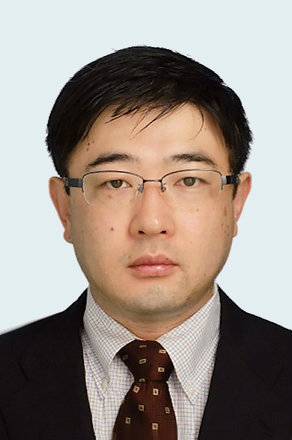
Professor:HONGO Kenta
E-mail:
[Research areas]
Materials Informatics, Data Science, Computer Simulations.
[Keywords]
Artificial Intelligence, Machine Learning, Bayesian Statistics, First-principles simulations, Materials Simulations
Skills and background we are looking for in prospective students
Students are expected to be strongly motivated to learn and comfortable with computer-based research. Since most projects rely on high-performance computing, familiarity with Linux environments and command-line operations is highly desirable. A solid background in mathematics—particularly calculus, linear algebra, and probability/statistics—is essential for understanding machine learning and first-principles simulations. Knowledge of applied mathematics (e.g., differential equations and Fourier analysis), as well as materials science and related physics and chemistry (such as quantum mechanics and solid-state physics), is also beneficial. While students are not expected to master all these topics at enrollment, they must be willing to acquire the necessary knowledge and skills independently through research activities.
What you can expect to learn in this laboratory
Materials Informatics (MI) integrates materials science with informatics, including data science, statistics, and machine learning. Through research activities in this laboratory, students will acquire a broad and practical understanding of materials science, computational science, and data-driven methodologies. By participating in industry-academia collaborative research projects, students learn how to formulate research problems, select appropriate computational and data-driven methods, and interpret results in the context of real-world constraints. This experience helps students develop the ability to connect fundamental research with practical applications. In addition, students will strengthen practical skills in programming, data analysis, and high-performance computing through daily research activities, building a solid foundation as researchers or advanced engineers in materials science and related fields.
【Job category of graduates】 Sumitomo Electric, Oak Ridge National Laboratory
Research outline
We study a wide range of material systems, including organic, inorganic, and biomaterials, across multiple length scales from atoms and molecules to clusters and solids. Our research is supported by large-scale computational resources, including JAIST high-performance computing systems and in-house laboratory servers, which enable systematic and large-scale simulations.
Our core methodologies include hierarchical materials simulations such as first-principles electronic structure calculations, molecular dynamics simulations, and computational thermodynamics. These simulation frameworks have been established through competitive research funding programs (e.g., JST PRESTO, KAKENHI, etc). Through these projects, we have developed robust computational platforms for evaluating materials stability and physical properties.
Building on this simulation infrastructure, we actively incorporate data-driven and AI-based approaches, including deep learning, Bayesian optimization, evolutionary algorithms, and annealing methods. We also explore quantum computing approaches such as quantum annealing to accelerate materials exploration.
Very recently, we have been conducting a JST CREST project focused on the discovery of novel polar metals. This project represents a cross-disciplinary effort spanning MI and materials simulations, where manifold learning is employed to efficiently explore vast materials spaces, followed by first-principles evaluation of synthesizability and physical properties. Our goal is to establish materials design strategies that are directly connected to experiments.
In addition, our laboratory has carried out industry–academia collaborative research projects with seven companies, addressing practical challenges in materials development through computational and data-driven approaches. These collaborations provide opportunities to connect fundamental research with real-world applications.
Key publications
- R. Dahule, K. Oqmhula, R. Maezono, K. Hongo, "Physics-informed data-driven discovery of polymer crystals with high thermal conductivity", ACS Applied Polymer Materials 7, 1431 (2025)
- H. Mizuseki, R. Sahara, K. Hongo, "Valence Electron Concentration-dependent Stability of L12, D023, and D022 Ordered Phases in High-Entropy Alloys", Computational Materials Science 259, 114114 (2025)
- A.T. Hanindriyo, A. Kumar, S. Yadav, T. Ichibha, R. Maezono, K. Nakano, K. Hongo, "Diffusion Monte Carlo evaluation of disiloxane linearisation barrier", Physical Chemistry Chemical Physics 24, 3761 (2022)
Equipment
JAIST High Performance Computing (HPC) systems, Lab’s computing servers (CPU: Fujitsu FX700, GPU: NVIDIA H100 x8, A100 x2, RTX 6000 Blackwell x3, RTX 6000 Ada x3, RTX 4070 Ti Super x3, DGX Sparck x2]
Teaching policy
Our teaching philosophy is based on that “cutting-edge, world‑class research leads to the best possible education.” While the primary goal of students is to complete their master’s or doctoral degree within the standard period, our mission is to support and guide them toward becoming independent researchers and advanced engineers. Students are trained through direct involvement in ongoing cutting-edge research projects and collaborations. Through these activities, they learn how to formulate research problems, select appropriate methodologies, and interpret results in a systematic and rigorous manner.
Given the increasing importance of large-scale projects and industry–academia collaborations, we emphasize responsibility, planning skills, and the ability to deliver results under realistic constraints. At the same time, we stress the importance of solid foundations in materials science, ensuring that new data-driven and AI-based methods are built upon established physical and chemical principles.
[Website] URL : https://www.jaist.ac.jp/~hongo/