

Exploring the link between human hearing and speech through sound
Laboratory on Acoustic Information Science
Senior lecturer:UEZU Yasufumi
E-mail:
[Research areas]
Speech Science, Acoustic Phonetics, Speech Information Processing
[Keywords]
Auditory–Speech Motor Control, Auditory Feedback, Speech Sensorimotor Learning and Adaptation, Speech Perception and Production, Speech Chain
Skills and background we are looking for in prospective students
Curiosity about the ordinary abilities to “hear” and “speak,” and above all, a genuine interest in sound are important. Knowledge of acoustics, speech and hearing, statistics, and programming is desirable, but necessary skills can be learned as the research progresses.
What you can expect to learn in this laboratory
Students will develop the skills needed to plan, conduct, analyze, and communicate experimental research, including literature review, hypothesis formulation, experimental design, acoustic and physiological data analysis, programming, statistics, presentations, and academic writing. The use of generative AI (LLMs) as a research support tool is encouraged, while students are expected to critically evaluate its accuracy and validity and select information appropriate to their research goals. The emphasis is not simply on using tools, but on being able to decide and explain what to investigate, what to measure, and which methods to use. Students will also develop the persistence to work through trial and error, identify problems, and continue testing and verification.
【Job category of graduates】 Research and development in information and communications technology, audio and acoustic systems, and related industries
Research outline
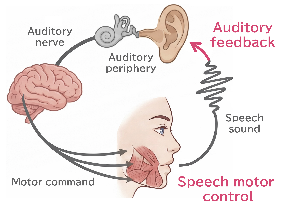
Fig. 1. The speech chain within a speaker
People hear sounds and voices around them and produce their own speech every day without giving these abilities much thought. Yet many questions remain hidden in these seemingly ordinary activities: Why does the way people speak change when what they hear changes? How is speech production acquired through language learning?
This laboratory focuses on how hearing and speaking interact—that is, the speech chain (Fig. 1). With particular emphasis on speech production, human speech production and perception experiments and acoustic analysis are used to investigate how speech is perceived, produced, and learned. Ultrasound tongue imaging and electroglottography (EGG) are also used to examine speech from both acoustic and physiological perspectives. Research groups that continuously investigate the relationship between hearing and speech from this perspective remain relatively uncommon in Japan. A distinctive feature of this laboratory is its approach to understanding speech perception, motor control, and learning through sound.
1. Auditory Feedback, Speech Motor Control, and Learning
Delayed auditory feedback (DAF), in which a speaker hears their own voice with a delay, and altered auditory feedback (AAF), in which properties such as pitch or formant frequencies are manipulated, are used to investigate how changes in the perceived voice affect speech timing, vocal production, and articulation. The research also examines how these responses adapt and are learned through repeated experience, how they differ depending on native language and linguistic experience, and how voice identity—the extent to which a voice sounds like one’s own—contributes to speech motor control.
2. Effects of Acoustic Environments and Auditory Processing on Speech
Changes in speech under unusual acoustic environments and voice-presentation conditions, such as background noise and bone-conducted sound, are investigated. In addition to experiments with human participants, computational simulations are used to examine how sound is represented and processed in the auditory periphery. The aim is to clarify what acoustic information is perceived and how that perception leads to changes in speech production. The resulting knowledge may also contribute to more natural and stable speech communication and audio presentation technologies.
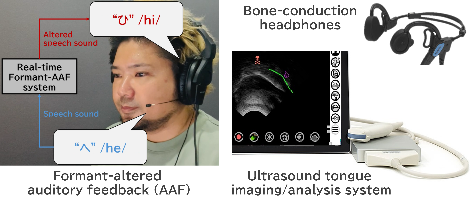
Fig. 2. Examples of experimental setups and equipment
Key publications
- Uezu, Y., Akagi, M., & Unoki, M. (2026). Effects of identity-related voice cues on speech timing under delayed auditory feedback. JASA Express Letters, 6(9).
- Uezu, Y., Hiroya, S., & Mochida, T. (2026). Task-irrelevant background broadband noise reduces redundancy in auditory-motor adaptation in speech production. Scientific Reports, 16, 29409.
- Uezu, Y., Akagi, M., & Unoki, M. (2025). Can the spectral representation of the auditory peripheral system explain vowel production changes under noises masking lower formants?. The Journal of the Acoustical Society of America, 158(3).
Equiment
Soundproof room
Equipment for speech production and perception experiments (headset microphones, headphones, etc.)
Real-time speech signal processing system
Ultrasound tongue imaging and analysis system (AAA)
Electroglottograph (EGG)
Teaching policy
The laboratory aims to develop independent researchers who can present their work at domestic and international conferences. Students repeatedly practice the research cycle of “question → hypothesis → experiment → analysis → interpretation → communication,” while developing the persistence to work through trial and error. Flexible individual discussions and joint seminars with the Unoki and Kidani Laboratories help students develop the ability to explain and discuss their own research.
[Website] URL : https://www.jaist.ac.jp/~y-uezu/