
Technology for Human-centered Collaboration & Creativity
~ Creativity, Community, and Culture + VR/AI ~
Laboratory on Collaboration Technology & Creativity
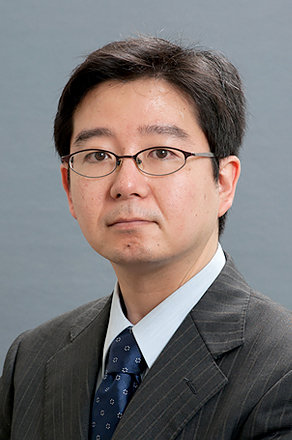
Professor:Yuizono Takaya
E-mail:
[Research areas]
Collaboration Technology, Computer Supported Cooperative Work (CSCW), Creativity, Knowledge Sciences
[Keywords]
Creativity Support, Community Support, Interaction Design, VR/AR Application, Urban Design, Human-centered AI, Emotional Design
Skills and background we are looking for in prospective students
Students from diverse backgrounds, such as science, engineering, and the humanities, who can undertake transdisciplinary research, are self-learners, can nurture their skills for research, and can build upon the work of their respected predecessors.
What you can expect to learn in this laboratory
We are social animals. We overcome complex tasks by working in groups or organizations. You can acquire skills depending on your research topic. If you wish to develop systems, you can acquire system design and programming development skills (network/web programming). If you explore meeting methodologies, you can learn meeting techniques and methods for understanding people (observation/experimentation). If you explore creativity, you can gain knowledge about creativity and methods for evaluating it. If you want to understand park design using VR, you can learn VR technology and methods to assess parks.
【Job category of graduates】 IT Engineer, Service Engineer, System Engineer, Socio-Tech Expert
Research outline

Figure 1: VR Decision-Making Meeting, Park Evaluation (Gaze Information, Meaning Processing), VR Gym (Peripheral Avatars).
Two practices of digital technology are intelligence amplification (IA), which makes humans wiser or more creative, and artificial intelligence (AI), which realizes automation with computing machines. We use the IA approach through design studies on information technology systems for a group’s creative problem-solving process over the Internet. To support humans, we utilize knowledge of humans from social sciences, psychology, management, and creativity research. In addition, you can use both IA and AI approaches toward human–machine symbiosis in the digital age.
Our research methodology is to design/implement information systems and then evaluate their effects on individual or group behaviors. Another research methodology is to design a collaborative work and evaluate it using existing IT systems. The methodology includes digital technologies and spaces such as artificial intelligence (AI), machine learning, and VR.
We have three concepts of our laboratory’s research and are open to new concepts.
- Creativity: Creativity Support, Creativity Education <Knowledge Creation> We are researching information systems that support brainstorming and the KJ method, known as idea generation techniques. The KJ method is noteworthy because it incorporates the three essential thinking forms for creative problem solving and design thinking: divergent thinking, convergent thinking, and evaluation. In recent years, we have introduced generative AI and utilized VR environments in research on individual and group creativity and decision-making. Additionally, in creativity development research through second language education, we focused on questioning behavior and confirmed its effects on language ability and creativity.
- Community: Community, Space Creation <Knowledge Sharing> It is known that factors such as frequent informal communication and psychological comfort significantly impact individual performance. Recently, we advanced research on park evaluation methods using VR technology and VR gyms. By incorporating human gaze patterns and objects viewed (meaningful image processing) within a VR-displayed park, we improved the park's affective evaluation. We also clarified how the movement speed and body type of surrounding avatars in VR gyms affect users' pedaling exercise and heart rate.
- Culture: Cross-Cultural Understanding & Cooperation <Different Knowledge, Language, Values> As globalization advances, cooperation among people with different cultural backgrounds is crucial. Within this context, we focus on cross-cultural understanding and cooperation using information systems. Recently, we conducted research on information systems that understand regional cultures and studies on learning cultural inheritance using digital technology. For example, we conducted fieldwork with farmers in Bangladesh and developed a system to support the sharing of agricultural knowledge. We are promoting research that considers sociocultural factors beyond individual and group understanding.
Key publications
- Kamada, K., Wang, & Yuizono, T. (2026). Human Misunderstanding of Stated AI Accuracy: Exploring Over- and Under-Reliance through the Lens of Prospect Theory. International Journal of Human-Computer Interaction.
- Liu, C., Wang, T. Y., & Yuizono, T. (2025). Assessing the landscape visual quality of urban green spaces with multidimensional visual indicators. Urban Forestry & Urban Greening, 106, 128727.
- Yu, X., Wang, T. Y., & Yuizono, T. (2023). Creativity Development through Questioning Activity in Second Language Education. In Frontiers in Education (Vol. 8, p. 1178655). Frontiers.
Equipment
Welcome the realization of new ideas through your own creations! To support and understand groups, we operate experimental systems using multiple computers and devices. These include VR headsets (5 units such as Meta Quest 3), heart rate sensors, skin voltage sensors, and position sensors. For data analysis, we use statistical analysis software and qualitative analysis support software.
Our lab's strength in Transdisciplinary Sciences
Digital transformation of our living spaces can build artificial spaces that integrate various sciences and technologies. We are working on digital technologies to understand and support human collaboration in this context. Mainly, you can challenge research that integrates social science and information technology, respecting the attitude of overcoming the barriers between the three cultures (science, engineering, and the humanities). Social science can integrate human activities' rational and emotional aspects with digital technologies. Information technology can improve human creativity or integrate automation technology with human behavior.
[Website] URL : https://www.jaist.ac.jp/ks/labs/yuizono/