


Research
Overview
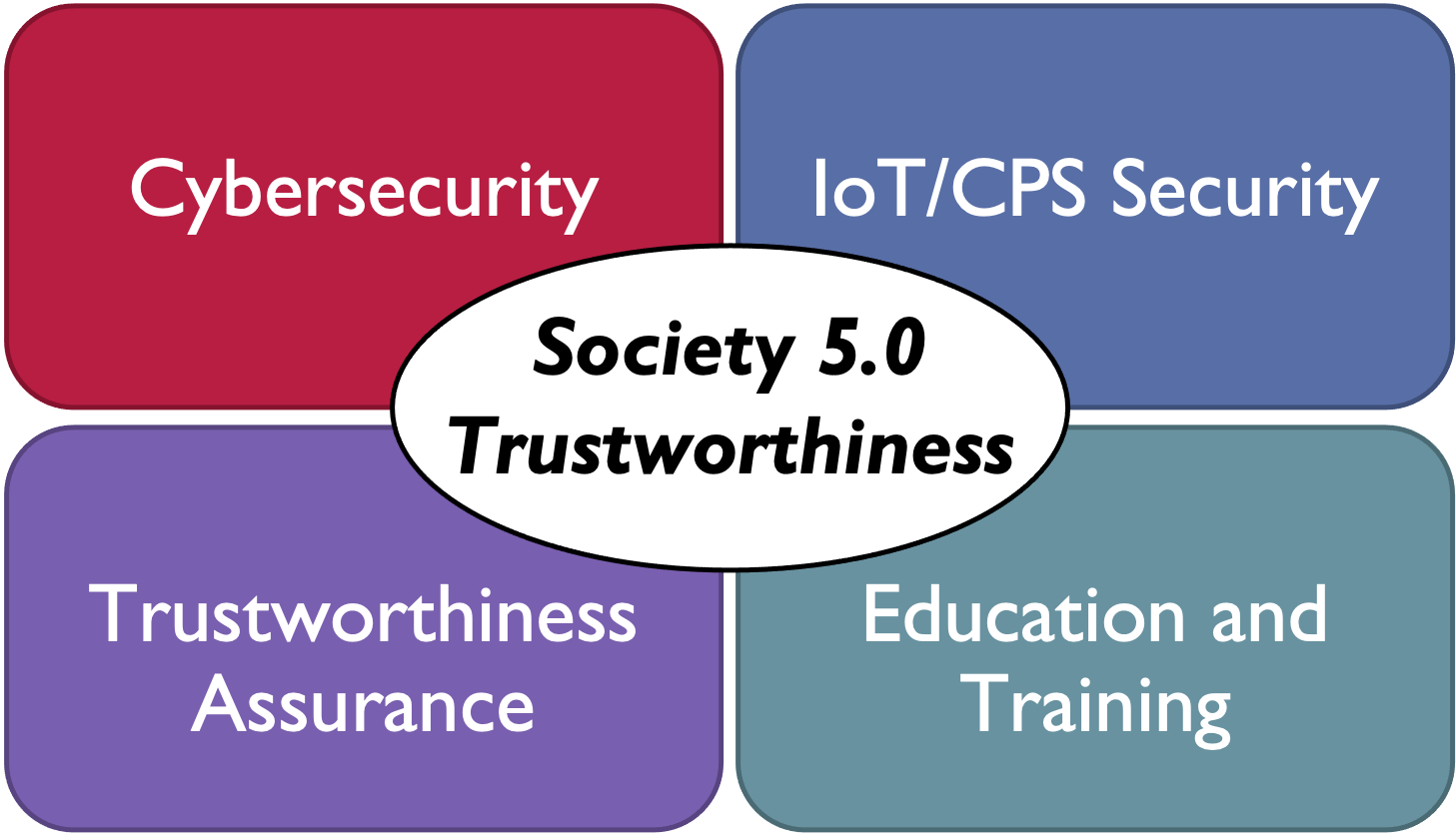
According to the Society 5.0 vision put forward by the Japanese government, the cyber and physical spaces are in the process of being tightly integrated to build a human-centered society. The Internet of Things (IoT) and Cyber Physical Systems (CPS) have started to become an integral part of our daily life, leading to new challenges and issues. These complex conditions place strong requirements regarding the trustworthiness of Society 5.0, and the key research question at the center of our lab's activities is: How to ensure a safe and secure Society 5.0?
Research Directions
To address the key research question mentioned above, our lab focuses on four research directions that contribute from various perspectives to ensuring the trustworthiness of Society 5.0. Several of the software tools that we developed in this context were released as open source on the lab's GitHub page to support research in this field.
|
Cybersecurity The ongoing increase of cybersecurity threats makes it necessary to create robust systems that support cybersecurity-related activities. For this purpose, we leverage modern techniques, such as AI and machine learning, including large language models (LLMs). Examples related to this research direction include:
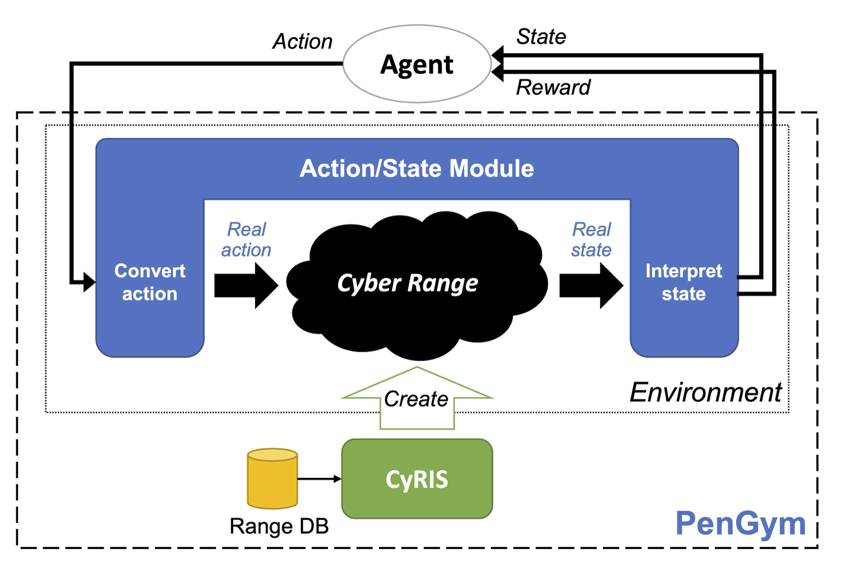
PenGym framework for reinforcement learning agent training
|
IoT/CPS Security IoT/CPS systems have specific characteristics, such as computation resource constraints and a complex System of Systems (SoS) nature. In order to address these issues, IoT/CPS security approaches require the use of suitable techniques, as highlighted in the examples below:
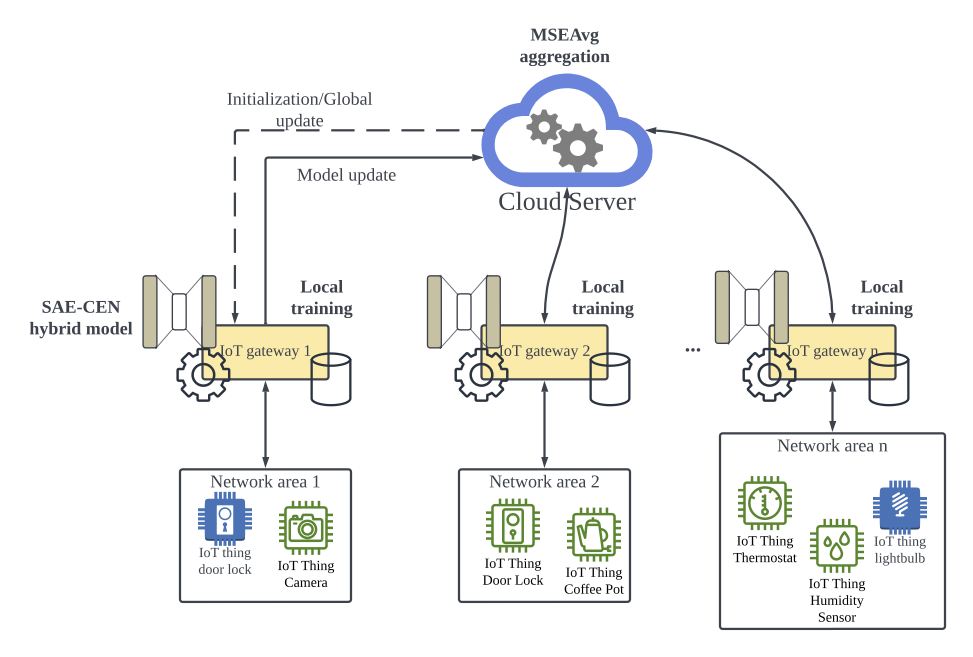
Federated learning approach for IoT network intrusion detection
|
|
Trustworthiness Assurance The Society 5.0 challenges must be thoroughly considered from the perspective of the five components of trustworthiness: safety, security, privacy, reliability and resilience. Examples of related activities include:
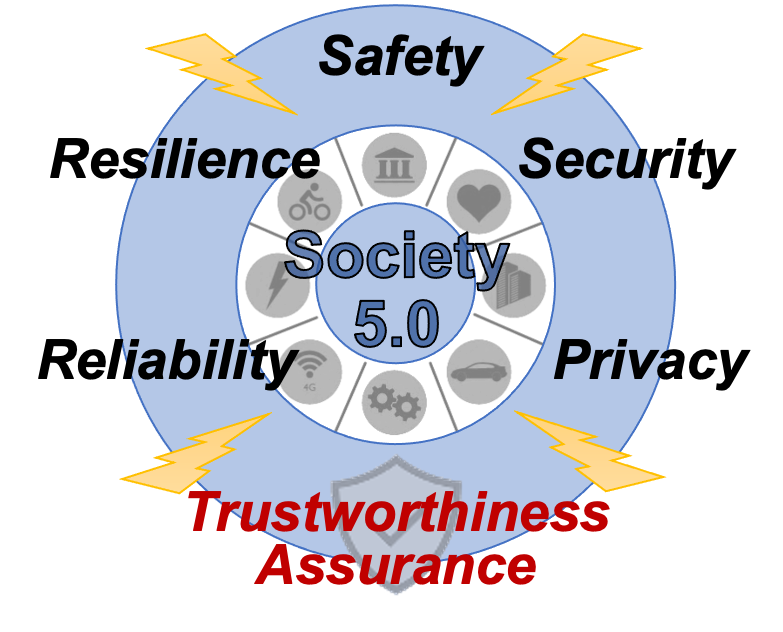
Trustworthiness assurance for Society 5.0
|
Security Education and Training The human factor is an important component of cybersecurity, and we conduct research in the areas of technical security training and security awareness training, as follows:
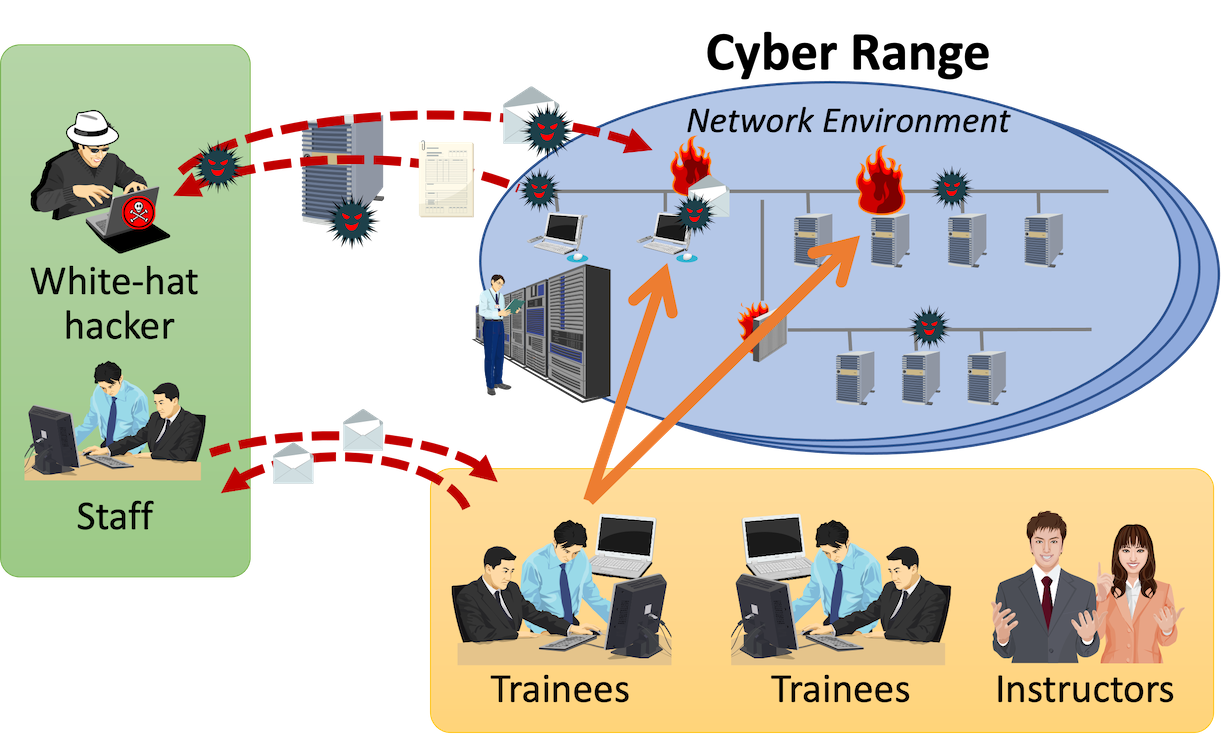
Hands-on technical security training using cyber
ranges
|
Last modified: Wed Jun 03 16:28:07 JST 2026