
CSoNet 2026 Tutorial
Speculative Decoding: Accelerating Large Language Model Inference

1Japan Advanced Institute of Science and Technology (JAIST), Nguyen Lab
November 16–18, 2026 (exact slot to be announced)
Ho Chi Minh City University of Technology, Ho Chi Minh City, Vietnam

About this tutorial

Large Language Models (LLMs) have achieved impressive success across a wide range of applications, but deploying them efficiently remains challenging due to the high latency and computational cost of autoregressive generation. Speculative decoding has emerged as an effective solution to this challenge by using a smaller draft model to predict multiple future tokens and a larger target model to verify these predictions in parallel. In practice, speculative decoding can provide 2–4× inference speedups while maintaining the same generation quality.

This tutorial provides an overview of the key ideas, algorithms, and recent developments in speculative decoding. We will introduce how speculative generation works, discuss recent advances in draft model design, verification mechanisms, and discuss practical considerations for applying speculative decoding to real-world LLM systems. Through this tutorial, we aim to provide a comprehensive understanding of the current landscape of speculative decoding and highlight its potential for building faster and more efficient LLM applications, as well as the challenges that remain for future research.

Schedule

A half-day tutorial of three hours. The outline below is provisional, and times will be filled in once the CSoNet 2026 programme is announced.

Time Section Presenter
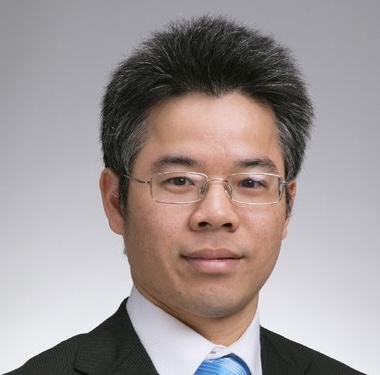
TBA – TBA Part I · Foundations Why autoregressive decoding is slow, and how draft-then-verify speeds it up without changing the output. Nguyen Le Minh
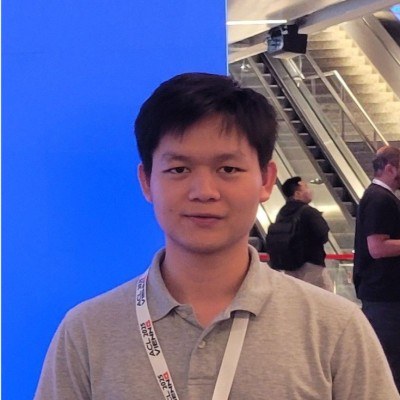
TBA – TBA Part II · A taxonomy of methods: drafting and verification The main families of draft models, and the ways a draft can be verified. Le Nguyen Khang
TBA – TBA Q & A session I
TBA – TBA Coffee break
TBA – TBA Part III · Advanced methods Recent algorithms that raise acceptance rates, and the limits they run into. Do Dinh Truong
TBA – TBA Part IV · Downstream applications & adaptations Adapting speculation to tasks beyond plain text generation. Le Nguyen Khang
TBA – TBA Part V · Systems, serving & practice What changes when speculative decoding meets a real serving stack. Do Dinh Truong
TBA – TBA Final remarks, open problems & Q & A session II All presenters

Reading List

Bold papers are discussed in detail during our tutorial.

For a broader introduction, see the community Reading List on speculative decoding. Our own work in this area is SPECTRA (ACL 2025), AdaSpec (AAAI 2026) and UniSpec (ACL 2026).

Part I — Foundations & history

Part II — A taxonomy of methods: drafting and verification

Drafting with lightweight heads

Self-drafting and early exit

Training-free drafting: retrieval, suffix automata and n-grams

Training and aligning a drafter

Verification: acceptance rules and draft trees

Part III — Advanced methods

State-of-the-art drafters

Learning to draft better

Multi-draft sampling and theoretical limits

Relaxing the lossless guarantee

Part IV — Downstream applications & adaptations

Reasoning and test-time scaling

Multimodal, vision and action

Diffusion, retrieval, agents and alignment

Part V — Systems, serving & practice

BibTeX

@misc{csonet2026-speculative-decoding-tutorial,
  author = {Nguyen, Le-Minh and Le, Nguyen-Khang and Do, Dinh-Truong},
  title  = {Speculative Decoding: Accelerating Large Language Model Inference},
  note   = {Tutorial at the 15th International Conference on
            Computational Science and Network Intelligence (CSoNet 2026)},
  year   = {2026},
  url    = {https://csonet-conf.github.io/csonet26/}
}