"This clearly means that the gap between rich and poor has become extremely pronounced in recent years." (Quoted from book [1-1], page 137).
"Super-large corporations and ultra-high-income earners grow by siphoning wealth from those around them. As the result, they gain even greater power to siphon, unlike the majority of small and medium-sized enterprises and ordinary people. (omitted) Conversely, when they face economic hardship, their options become limited, and they suffer even more—that's the way of the world." (Quoted from book [1-1], page 123).
"The top 1% of the wealthiest people own 45% of the world's wealth. In contrast, approximately 3.6 billion people, or about 44% of the world's population, live on less than $6.85 (approximately 960 yen) a day. This figure has remained unchanged since 1990." (Quoted from book [1-2], pages 6-7).
"The decline in food self-sufficiency began noticeably in the 1970s. It was around this time that the so-called grain majors, Western grain trading companies, emerged. (omitted) These grain majors built global networks to connect supply and demand, prioritizing profit. (omitted) Their influence is significant, effectively controlling even grain prices. Profits that should rightfully be returned to farmers are now being handed over to giant corporations." (Quoted from book [1-2], pages 14-15).
"Monoculture refers to the intensive cultivation of only one type of crop. Its history began when European powers established colonies in Africa and Asia, mass-producing crops highly valued in Europe on large plantations. (omitted) The drawback of monoculture, which relies on specific crops, is that crop failures due to unfavorable weather conditions can have a major impact. Fluctuations in international commodity prices also affect a country's economy." (Quoted from book [1-2], pages 38-39).
"From the perspective of medieval Europe, the East was a glittering and prosperous world. A symbol of Eastern wealth was the spices, highly valued in Europe where meat consumption was widespread. Spices brought from the East by Islamic merchants were traded at high prices. (omitted) However, European ambitions did not stop at acquiring valuable goods. Europeans, who held Christianity as absolute, viewed the indigenous people who believed in other religions as barbaric and inferior, and sought to dominate them by force. (omitted) European powers sought to monopolize wealth through plunder and slaughter, and at their peak, they colonized most of the world." (Quoted from book [1-2], pages 62-63).
"According to a UN report, 22,495 children will be severely affected by conflict in 2024. This figure includes not only casualties but also 4,573 abducted children and 7,402 children conscripted or forced into service. (omitted) In the 19th and early 20th centuries, the seven European powers unilaterally divided and ruled almost all of Africa. After World War II, these countries gained independence, but the borders arbitrarily drawn by the great powers ignored the distribution of ethnic and tribal groups. As the result, multiple ethnic groups were incorporated into one country, making ethnic conflicts more likely due to religious conflicts, resource disputes, and other factors." (Quoted from book [1-2], pages 70-71).
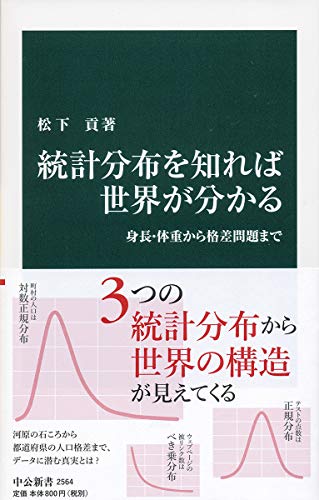 |
[1-1] M.Matsushita,
"『Understanding Statistical Distributions Reveals the World: From Height and Weight to Inequality』 Chuokoron-Shinsha(2019/10/25), ISBN-13: 978-4121025647 |
 |
[1-2] Info-visual Research Laboratory,
『Understanding Global Inequality and Resource Crises Through Illustrations: A Guide for 14-Year-Olds』 Ohta Publishing(2025/11/27), ISBN-13: 978-4778340957 |