

Parametric Urban Design: A Promising Method to Create Daily Environments Supporting Health
Researchers highlight how parametric urban design uses computational tools and algorithms to generate actionable findings for urban design practice
Features of urban areas, such as street connectivity or access to green spaces, can impact cardiometabolic health. However, most studies in this area do not provide actionable findings for effective urban planning. Researchers now discuss how parametric urban design, an advanced computational approach, could overcome the existing methodological limitations and increase the applicability of findings. Their insights could help clinicians, public health researchers, and urban designers to refine their current approaches and develop health-focused environments.
Cardiometabolic diseases, such as heart attack, obesity, and diabetes, are responsible for nearly one-third of deaths worldwide annually. These diseases are influenced not only by personal habits, such as exercise and diet, but also by individuals' surroundings. Specifically, the way urban areas are designed could impact individuals' behaviors (like walking instead of driving) and environmental exposures (like air pollution and traffic noise), which in turn could affect cardiometabolic health.
Many studies have also demonstrated the link between features of built environments, such as street connectivity and access to open spaces, with cardiometabolic health outcomes. However, current methods used in this research area often produce inconsistent and vague findings, hindering their practical implementation for designing urban areas.
To address this issue, a team of researchers led by Associate Professor Mohammad Javad Koohsari from the Japan Advanced Institute of Science and Technology (JAIST) proposed using parametric urban design, an approach where multiple possible urban design layouts are generated and assessed using computational tools and algorithms, as a potential solution. The team included Associate Professor Andrew T. Kaczynski from the University of South Carolina, Professor Emily Talen from the University of Chicago, and Professor Koichiro Oka from Waseda University. Their study was published online on November 23, 2025, in the Developments in the Built Environment journal.
Delving deeper, Dr. Koohsari explains, "Our work highlights two main limitations in the current approaches. Addressing them requires rethinking of how built environment features are conceptualized, measured, and analyzed, and parametric urban design provides a way forward."
To this end, researchers reviewed existing literature to examine how parametric urban design can tackle the limitations and be applied to studies on built environments and cardiometabolic health.
Most studies have assessed the link between static built environment measures and cardiometabolic health. However, static built environment measures, which are fixed metrics, like the number of parks or the number of household units (residential density) in an area, lack specificity. For example, a finding like 'a 20% increase in residential density is linked to reduced obesity' shows 'what' works, not 'how' to achieve it. Residential density can be increased in different ways, such as by evenly distributing extra units or grouping them into a few mid-rise buildings or one high-rise building. However, it is unclear which specific arrangement is linked to reduced obesity.
Parametric urban design addresses this gap by breaking broad, fixed measures into specific parameters that show how these measures are spatially arranged. For example, residential density can be broken into parameters, such as building height, the space between buildings, and the grouping of buildings. By quantifying and representing these parameters computationally, researchers can then assess how specific arrangements affect cardiometabolic health. Thus, this approach could make the findings more applicable to urban design practice.
Previous studies have also mostly assessed each built environment feature separately, without considering the interdependencies between these features. For instance, in an area with large open spaces and fewer housing units, increasing residential density by adding mid-rise and high-rise buildings can increase the number of streets connecting these new buildings, which is linked to more walking and cycling. However, the same arrangement can also reduce open spaces, which is concerning since greater access to open spaces is linked to lower cardiometabolic risk. Therefore, findings that ignore these ripple effects can have contradictory implications.
Parametric urban design addresses this issue by utilizing algorithmic models, where built environment features are represented as parameters, and their interdependencies are defined. These parameters are then applied in a simulation model (like a geospatial artificial intelligence model), where parameter ranges are set using real-world spatial data. Through this approach, changing one feature automatically updates the others. Researchers can also add health outcomes as parameters to effectively assess the link between the built environment and cardiometabolic health.
"Our research suggests that parametric urban design can turn broad findings into specific options for how streets, buildings, and parks might be arranged. However, its application in modeling the relationship between the built environment and cardiometabolic health remains largely unexplored. Therefore, more empirical studies and strong collaboration between clinicians, public health scholars, and urban designers are needed to make meaningful progress in this area," concludes Dr. Koohsari.
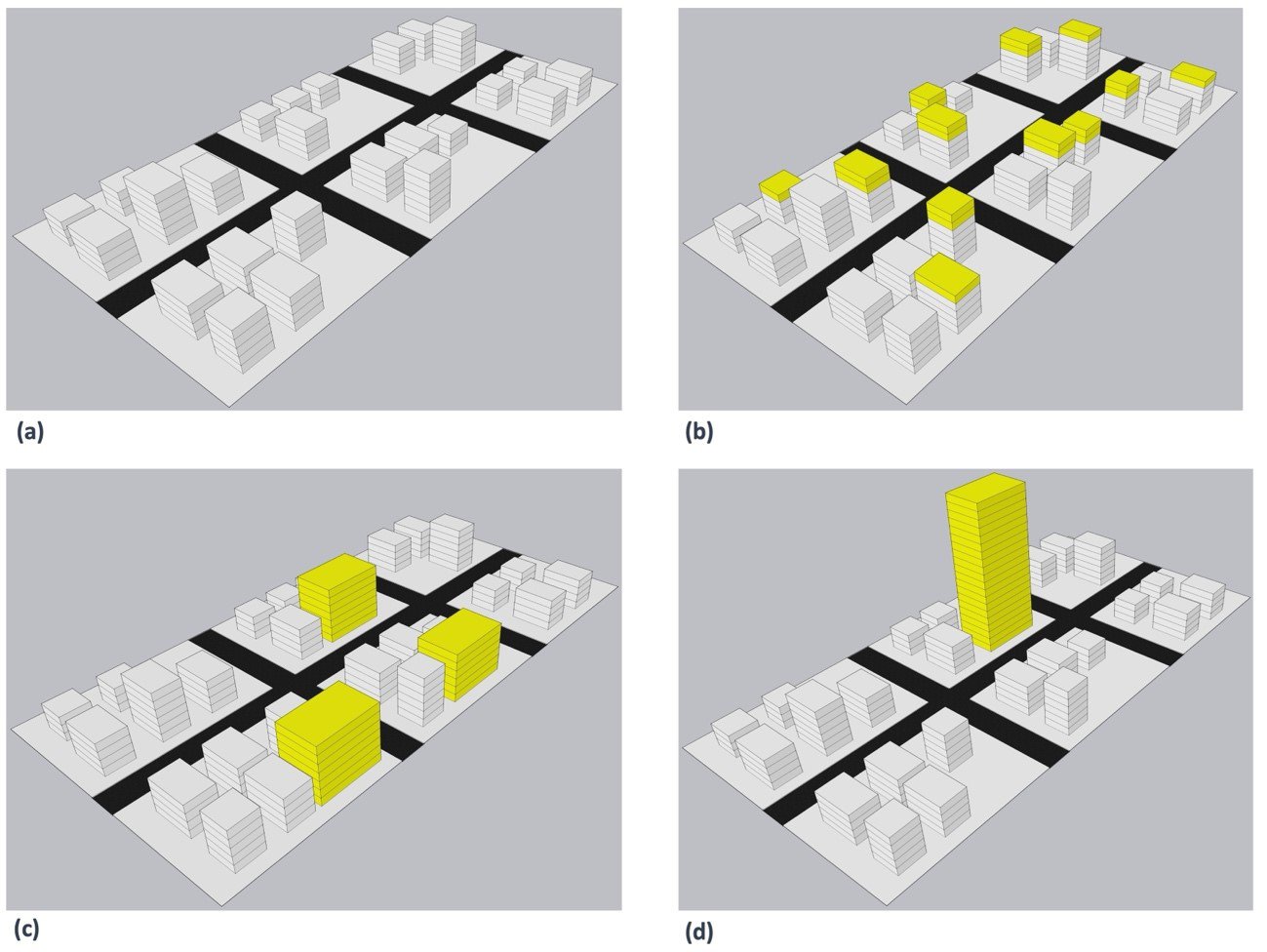
Image Title: Parametric Urban Design Science and Health
Image Caption: The way urban areas are designed could impact cardiometabolic health. However, findings in this research area are often abstract, which restricts their implementation in urban design practice. To address this, researchers proposed using parametric urban design, an advanced computational approach, to tackle existing methodological gaps and generate actionable findings.
Image Credit: Mohammad Javad Koohsari from the Japan Advanced Institute of Science and Technology
Image Source Link: https://www.sciencedirect.com/science/article/pii/S2666165925002145?via%3Dihub#sec5
License Type: CC BY-NC-ND 4.0
Usage restrictions: Credit must be given to the creator. Only noncommercial uses of the work are permitted. No derivatives or adaptations of the work are permitted.
Reference
| Title of original paper: | From Associations to Action: Parametric Urban Design Science for Cardiometabolic Health |
| Authors: | Mohammad Javad Koohsari*, Andrew T. Kaczynski, Emily Talen, and Koichiro Oka |
| Journal: | Developments in the Built Environment |
| DOI: | 10.1016/j.dibe.2025.100814 |
December 16, 2025
