

Advanced Shared Core Facilities
Knowledge Systems
To help translate ideas for creation and social implementation into tangible forms, we have equipped our facilities with digital fabrication tools such as 3D printers and laser cutters. Through prototyping and validation in design thinking and collaborative, project-based learning, we support the discovery of future needs and the creation of innovation.
Digital Fabrication System

We are equipped with a range of digital fabrication machines—including 3D printers, laser cutters, and CNC milling machines—that process materials based on digital data. These systems support various applications such as 3D modeling, cutting and engraving sheet materials, and machining wood and plastics, enabling ideas to be quickly transformed into tangible forms.
They can be widely used for prototyping products and artworks, model making, and parts fabrication, serving as facilities that allow design and research & development processes to be advanced through hands-on evaluation of physical objects.
Prototyping System

This system is equipped with various workshop facilities for hands-on fabrication of three-dimensional objects using materials such as wood and plastics. By using woodworking machines and hand tools, users can create models, prototypes, and processed parts. It is also well suited for fine adjustments, finishing work, and fabrication while checking the texture and qualities of materials—tasks that are often difficult to accomplish through digital fabrication alone. This system provides a fundamental production environment for exploring ideas as tangible forms.
Shared Core Research Facilities
| Digital Fabrication System | 3D Printers: Formlabs: Fuse 1+ 30W , Creality: Sermoon D1, Flashforge: Creator 4s, Formlabs: Form2 Laser Cutters:Trotec SP500 CNC Milling Machines: Shizuoka Iron Works Co., Ltd. DT-30N(5-axis model), Routerman (manufactured by Ubon Co., Ltd.)1313, Roland Corporation MODELA PRO II MDX-540A |
|---|---|
| Prototyping System | Vacuum Former (Model 690, manufactured by Seiko Sangyo Co., Ltd.) Slide Saw (No. 25010, manufactured by PROXXON) Drill Press, Band Saw, Compact Paint Booth, Electric Kiln, etc. |
Information Systems
Advanced Computing Infrastructure
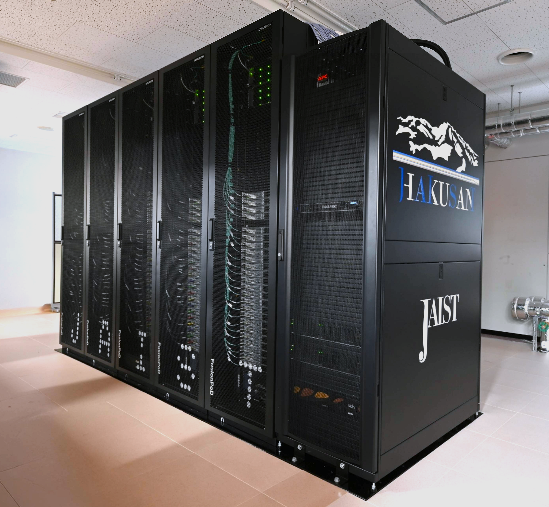
JAIST AI and HPC System “HAKUSAN”
The Advanced Computing Infrastructure at JAIST consists of high-performance computing systems, GPU clusters, and cloud-based virtual computing environments that support a wide range of research and educational activities in Knowledge Science, Information Science, Materials Science, and related interdisciplinary research fields. The infrastructure accommodates diverse computational demands, including large-scale simulations, artificial intelligence (AI), machine learning, and data science, and serves as a shared research platform supporting advanced research and development across JAIST. By providing integrated access to high-performance CPUs, large-memory systems, and state-of-the-art GPUs, it serves as a core foundation for data-driven research and the advancement of AI for Science.
eMEDX Computing Infrastructure
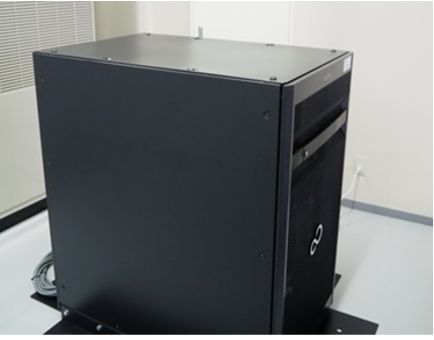
eMEDX Computing System
The eMEDX Computing Infrastructure is a GPU-based computing environment designed to support data-driven research in life sciences, biomedical sciences, and related fields within Research Center for Exponential Biomedical DX (eMEDX: Neo Excellent Core). The system has been developed to enable large-scale AI model training, multimodal data analysis, and advanced computational research, and is primarily utilized by researchers participating in the eMEDX research program.
High – Speed, Large – Volume Storage Systems
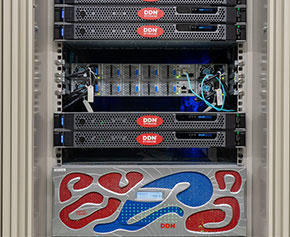
JAIST provides multiple high-speed, large-capacity file storage systems to ensure reliable and secure data management for all the members. These file servers are connected through the campus high-speed network, enabling users to seamlessly access their data from any computing system within JAIST. Automated backup services are provided to protect valuable research data, allowing users to focus on their research and educational activities without the burden of data management. Multiple file storage systems are available to accommodate different usage requirements and research needs.
Campus Network Systems
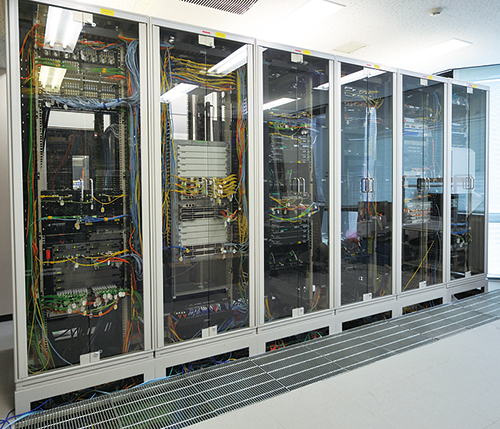
JAIST operates a high-speed campus network based on advanced Layer-3 switching technology. The network provides 10 Gigabit Ethernet connectivity from the backbone to floor switches, enabling fast and reliable access to servers, storage systems, and computing resources across the university.
The JAIST Tokyo Satellite is connected to the main campus via a dedicated 10 Gbps link. Our campus network system provides 200 Gbps connectivity to SINET6, a 400 Gbps full-mesh academic network connecting universities, research institutes, and cloud service providers throughout Japan.
Distance Learning System
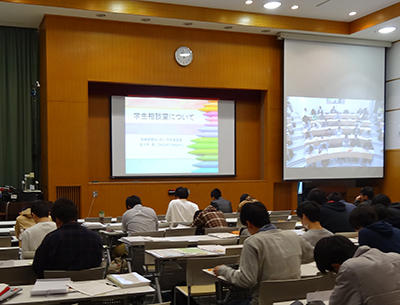
The distance learning system enables us to do lecture and conference with researchers and students at remote locations. It is a relatively small unit which includes a camera and microphones that record own side video, video/audio outputs from another side, and a codec that performs analog/ digital signal conversion and transmission. Through an MCU (Multipoint Control Unit), it is possible to realize a multi-point video conference with a Full-HD video and PC screen images. We also support web conferencing services and studios that offer similar features on PCs.
Shared Core Research Facilities
| Advanced Computing Infrastructure | JAIST AI and HPC System "HAKUSAN" CPU Nodes: 124 Nodes, 31,744 CPU-cores, 205 TB Memory GPU Nodes (High-end): 10 Nodes, 20 GPUs (NVIDIA A100) GPU Nodes (Middle-end): 20 Nodes, 40 GPUs (NVIDIA A40) JAIST Cloud System (VM Hosting Service) General-Purpose VM: 32 Nodes, 2,048 CPU-cores, 32 TB Memory High-Performance VM: 1 Node, 96 CPU-cores, 4 TB Memory GPU VM: 4 Nodes, 8 GPUs (NVIDIA H100) |
|---|---|
| eMEDX Computing Infrastructure | eMEDX Computing System: GPU Nodes: 1 Node, 8 GPUs (NVIDIA H100) |
| High-Speed, Large-Volume Storage Systems | Fujistu ETERNUS Storage System Dell PowerScale Storage System DataDirect Networks GRIDScaler Storage System https://www.jaist.ac.jp/iscenter/en/jaist-cloud/desktop/cloud-desktop-folder/ |
| Campus Network Systems | Juniper Networks: MX304, Cisco Systems: NCS540, Palo Alto Networks: PA-3430, Juniper Networks: PTX10001, Arista Networks: 7280CR3, Juniper Networks: QFX5120 |
| Distance Learning System | Lecture archive system: Moodle Video conference system: HP Poly G7500, Studio Series PC video conference system: Zoom Education 8K60Hz Portable Camera: ASTRODESIGN AB-4831 https://dlc.jaist.ac.jp/dlc/index.html |
| Printing Support System | RISO, Japan: ORPHIS GD9630 (High Speed Printer with Book Binding), Canon, Japan: Image PROGRAF TX-3000 (A0 Large-Format Printer), Canon, Japan: ImagePROGRAF PRO-6100S (60-inch Large-Format Printer), Fujitsu, Japan: Scan Snap FI-SV600 (Color Image Scanner) GBC: SureBind2000 (Portable Book Binding) https://www.jaist.ac.jp/iscenter/en/printing/ |
Material Analysis Systems
Nuclear Magnetic Resonance spectroscopy (NMR)
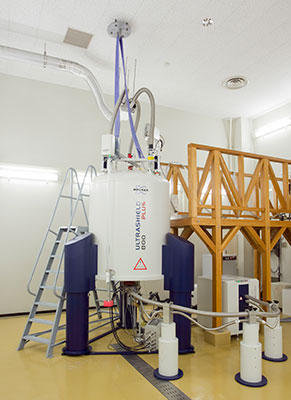
Nuclear Magnetic Resonance (NMR) spectroscopy is one of the powerful non-destructive analytical methods to obtain chemical and physical information of research samples. The high-field (800 MHz) NMR in JAIST is mainly used to investigate structure, dynamics, and interaction of biomolecules such as proteins, saccharides, DNA and RNA.
*Completely destroyed in the 2024 Noto Peninsula Earthquake. A replacement unit is scheduled for installation in 2026.
Fourier transform ion cyclotron resonance mass spectrometer (FT-ICR MS)
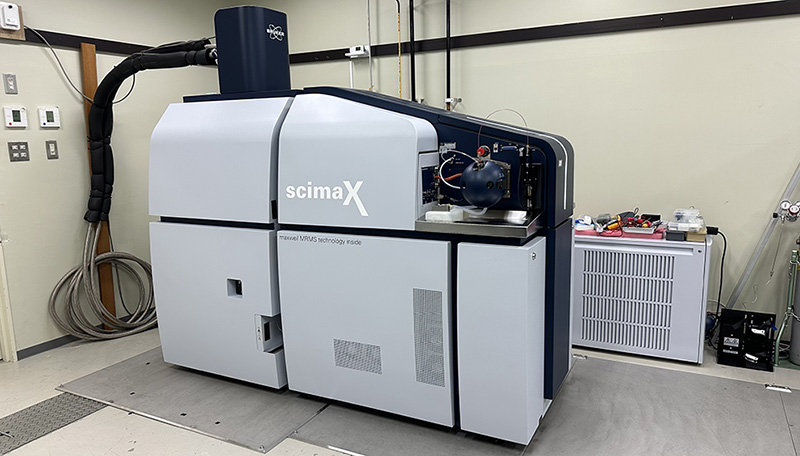
FT-ICR MS produces high-resolution mass spectrum data and further enables to determine the chemical composition of molecules. The high sensitivity of this instrument allows it to detect small amounts of components, even on the order of pico to femtomole. We can analyze a wide variety of samples, including low-molecular weight compounds, organometallic complexes, and biomolecules. It also supports MALDI imaging to visualize the localization of target molecules.
Focused Ion Beam–Scanning Electron Microscope(FIB-SEM)
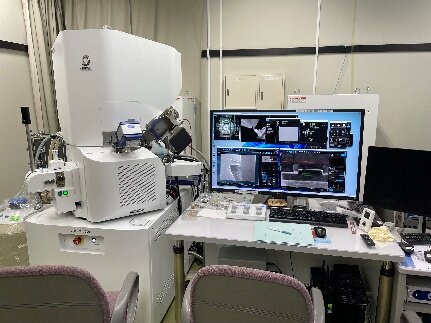
FIB-SEM is an advanced integrated system that combines a Focused Ion Beam (FIB) and a Scanning Electron Microscope (SEM). The FIB enables precise material removal at the nano- to microscale, allowing for sample processing, cross-section preparation, and thin specimen fabrication. The SEM provides high-resolution imaging of processed areas and cross-sectional structures, making it a powerful tool for analyzing internal microstructures of materials. Furthermore, by repeatedly milling the sample while acquiring SEM images, FIB-SEM enables three-dimensional structural analysis.
Scanning Transmission Electron Microscope (STEM)
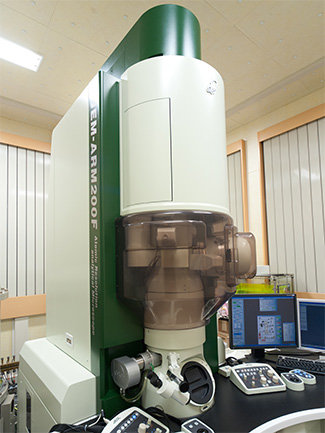
This system combines a Scanning Transmission Electron Microscope (STEM) with a spherical aberration corrector.
By correcting aberrations in the electron probe, a finely focused electron beam—down to the atomic scale—is scanned across the sample, while transmitted and scattered electrons are detected to enable high-resolution observation of microstructures.
This system allows for the analysis of atomic arrangements, interface structures, defects, and elemental distributions with exceptional spatial resolution. It is widely used for structural characterization of nanomaterials, semiconductors, catalysts, thin films, and crystalline materials.
Shared Core Research Facilities
| Molecular mass spectrometer (FT-ICR-MS) |
Bruker, Germany: SolariX, scimaX |
|---|---|
| Gas Chromatograph–Mass Spectrometer (GC-MS) | JEOL: AccuTOF GCX |
| Liquid Chromatograph–Mass Spectrometer (LC-MS) | Waters, US: ACQUITY UPLC H-Class & M-Class (Nano LC), SYNAPT XS |
| Matrix-Assisted Laser Desorption/Ionization Time-of-Flight/Time-of-Flight Mass Spectrometer (MALDI-TOF/TOF MS) |
Bruker, Germany: ultraflextreme |
| Field Emission Scanning Electron Microscope (FE-SEM) | Hitachi High-Tech: Regulus8230, S5200 |
| Transmission electron microscope (TEM) | Hitachi: H-7650 JEOL: JEM-2100Plus |
| Atomic-Resolution Scanning Transmission Electron Microscope (STEM) | JEOL: JEM-ARM200F |
| Focused ion beam system (FIB) | SII-NT: SMI3050 |
| Focused Ion Beam–Scanning Electron Microscope (FIB-SEM) | JEOL: JIB-PS500i |
| Scanning Auger Electron Microscope (SAM) | ULVAC-PHI: SAM 670 Xi |
| Ambient Atomic Force Microscope (AFM) | Hitachi High-Tech Science: AFM5000II SPA-400 |
| Solid-state nuclear magnetic resonance spectrometer (NMR 500MHz) | Bruker, Germany: AVANCE III 500 |
| Nuclear magnetic resonance spectrometer (NMR 400MHz) | Bruker, Germany: AVANCE NEO 400 |
| Solid-State Nuclear Magnetic Resonance Spectrometer (NMR 400MHz) |
Bruker, Germany: AVANCE NEO 400WB |
| X-ray photoelectron spectroscopy system (XPS) | Fisons Instruments, USA: S-ProbeTM2803, Kratos Analytical: AXIS-ULTRA |
| Positive and Inverse Photoelectron Spectroscopy System (PYS+IPES) | Techno Science: PYS-200+IPES |
| Ambient Photoelectron Yield Spectroscopy System (PYS) | Riken Keiki: AC-2 |
| Laser Raman Spectrometer | HORIBA: T64000 |
| Physical Property Measurement System (PPMS) | Quantum Design, USA: DynaCool-9T |
| Helium Liquefier | Linde, Switzerland: L140 |
| Cleanroom Micro/Nanofabrication Facility | EBL (30 kV, 50 kV), Maskless lithography system (Heidelberg Instruments: MLA150 (405 nm, 375 nm)), Thermal Evaporation (ANELVA), Electron-beam Evaporation (ULVAC), RF Sputtering (ANELVA, ULVAC), ECR Sputtering (Elionix: EIS-220), Atomic Layer Deposition (ALD), Molecular Beam Epitaxy (MBE), Reactive Ion Etching (SAMCO: RIE-10NR, RIE-101iPH), Ion Implantation (Nissin Ion Equipment), Infrared lamp annealing (ULVAC) etc. |
* These are just some of the main pieces of equipment -there are many more.
